As October brings Breast Cancer Awareness Month into focus, it’s a timely reminder to tune into your breasts and make regular checks part of your everyday health routine. According to Cancer Research UK, roughly one in seven women in the UK will develop breast cancer in their lifetime, with a new diagnosis occurring about every 10 minutes. Reassuringly, most women (almost 100%*) diagnosed with stage-one breast cancer can be treated successfully, but that percentage drops significantly the later it is diagnosed. The key is to know the signs to look for and catch any changes early.
For Breast Cancer Awareness Month, Women’s Health speaks to Ms Jajini Varghese, a specialist in plastic surgery and breast oncology surgery at HCA Healthcare UK, about staying on top of self-checks and the overlooked symptoms to watch for.
Know your own normal
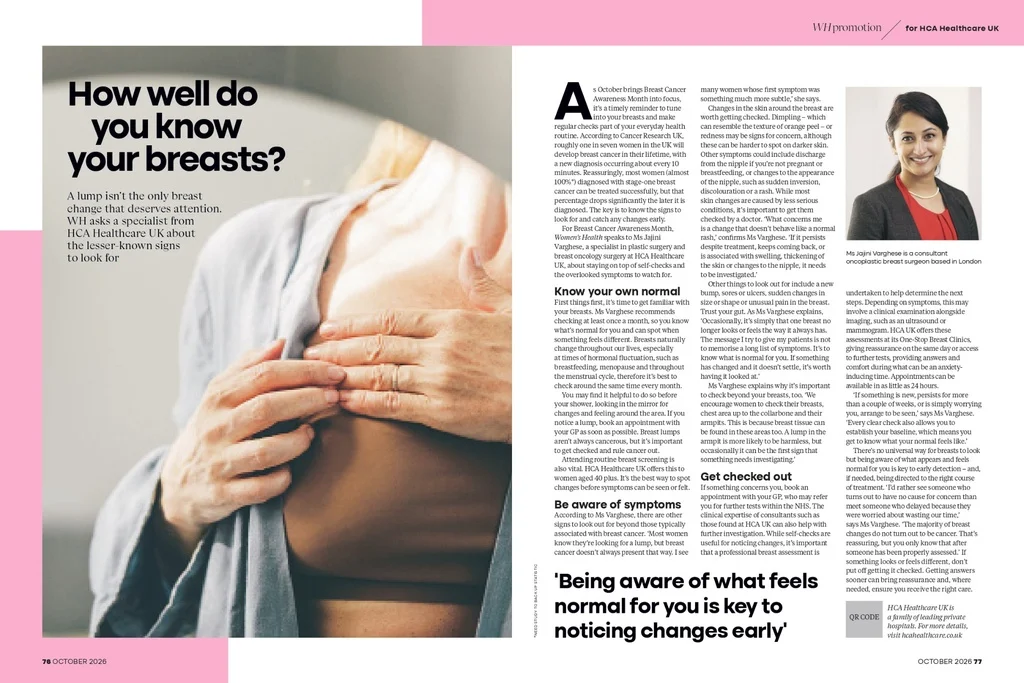
First things first, it’s time to get familiar with your breasts. Ms Varghese recommends checking at least once a month, so you know what’s normal for you and can spot when something feels different. Breasts naturally change throughout our lives, especially at times of hormonal fluctuation, such as breastfeeding, menopause and throughout the menstrual cycle, therefore it’s best to check around the same time every month.
You may find it helpful to do so before your shower, looking in the mirror for changes and feeling around the area. If you notice a lump, book an appointment with your GP as soon as possible. Breast lumps aren’t always cancerous, but it’s important to get checked and rule cancer out.
Attending routine breast screening is also vital. HCA Healthcare UK offers this to women aged 40 plus. It’s the best way to spot changes before symptoms can be seen or felt.
Be aware of symptoms
According to Ms Varghese, there are other signs to look out for beyond those typically associated with breast cancer. ‘Most women know they’re looking for a lump, but breast cancer doesn’t always present that way. I see many women whose first symptom was something much more subtle,’ she says.
Changes in the skin around the breast are worth getting checked. Dimpling – which can resemble the texture of orange peel – or redness may be signs for concern, although these can be harder to spot on darker skin. Other symptoms could include discharge from the nipple if you’re not pregnant or breastfeeding, or changes to the appearance of the nipple, such as sudden inversion, discolouration or a rash. While most skin changes are caused by less serious conditions, it’s important to get them checked by a doctor. ‘What concerns me is a change that doesn’t behave like a normal rash,’ confirms Ms Varghese. ‘If it persists despite treatment, keeps coming back, or is associated with swelling, thickening of the skin or changes to the nipple, it needs to be investigated.’
Other things to look out for include a new bump, sores or ulcers, sudden changes in size or shape or unusual pain in the breast. Trust your gut. As Ms Varghese explains, ‘Occasionally, it’s simply that one breast no longer looks or feels the way it always has. The message I try to give my patients is not to memorise a long list of symptoms. It’s to know what is normal for you. If something has changed and it doesn’t settle, it’s worth having it looked at.’
Ms Varghese explains why it’s important to check beyond your breasts, too. ‘We encourage women to check their breasts, chest area up to the collarbone and their armpits. This is because breast tissue can be found in these areas too. A lump in the armpit is more likely to be harmless, but occasionally it can be the first sign that something needs investigating.’
Get checked out
If something concerns you, book an appointment with your GP, who may refer you for further tests within the NHS. The clinical expertise of consultants such as those found at HCA UK can also help with further investigation. While self-checks are useful for noticing changes, it’s important that a professional breast assessment is undertaken to help determine the next steps. Depending on symptoms, this may involve a clinical examination alongside imaging, such as an ultrasound or mammogram. HCA UK offers these assessments at its One-Stop Breast Clinics, giving reassurance on the same day or access to further tests, providing answers and comfort during what can be an anxiety-inducing time. Appointments can be available in as little as 24 hours.
‘If something is new, persists for more than a couple of weeks, or is simply worrying you, arrange to be seen,’ says Ms Varghese. ‘Every clear check also allows you to establish your baseline, which means you get to know what your normal feels like.’
‘There’s no universal way for breasts to look but being aware of what appears and feels normal for you is key to early detection – and, if needed, being directed to the right course of treatment, which may include breast conserving surgery when clinically appropriate. ‘I’d rather see someone who turns out to have no cause for concern than meet someone who delayed because they were worried about wasting our time,’ says Ms Varghese. ‘The majority of breast changes do not turn out to be cancer. That’s reassuring, but you only know that after someone has been properly assessed.’ If something looks or feels different, don’t put off getting it checked. Getting answers sooner can bring reassurance and, where needed, ensure you receive the right care, including mastectomy and reconstructive surgery when appropriate.
‘Being aware of what feels normal for you is key to noticing changes early’


 6 min read