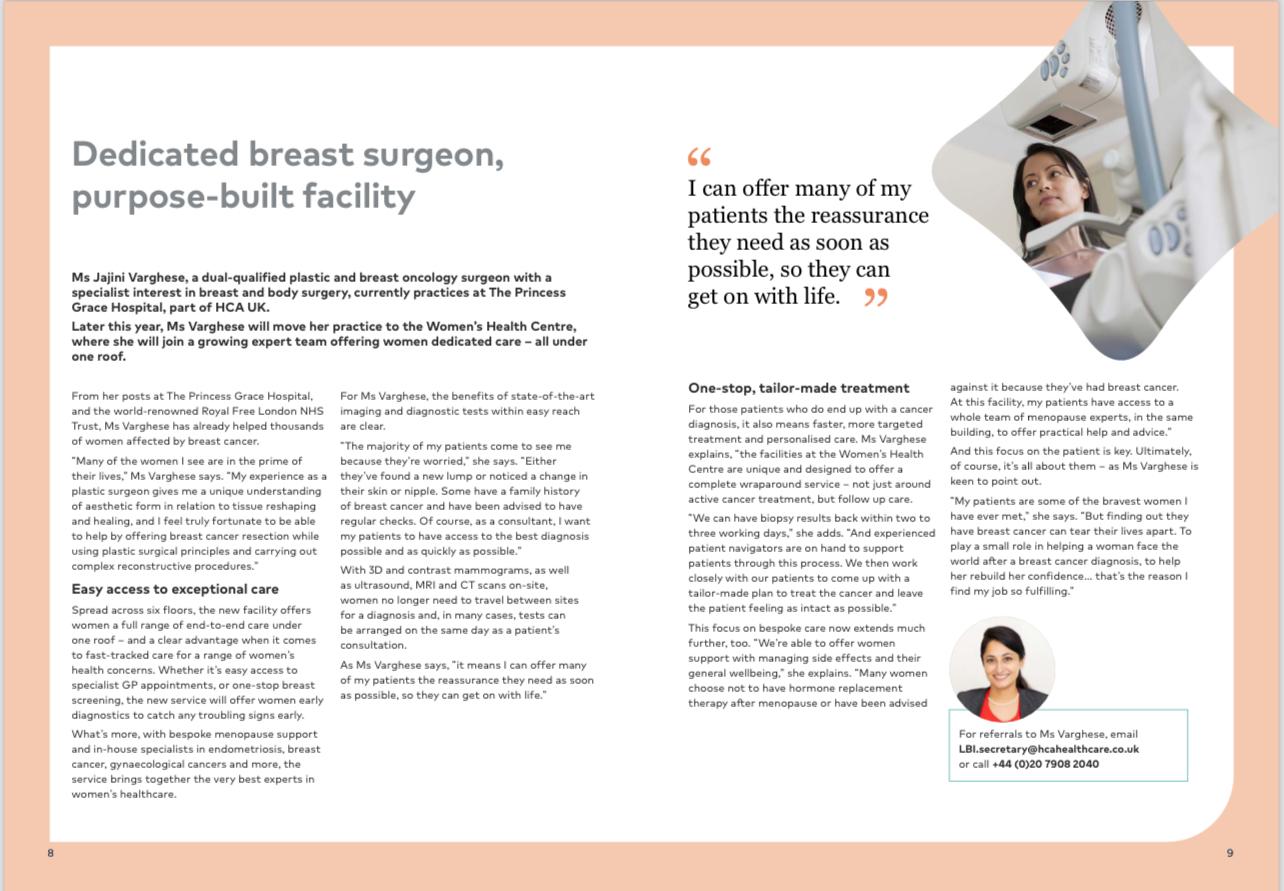
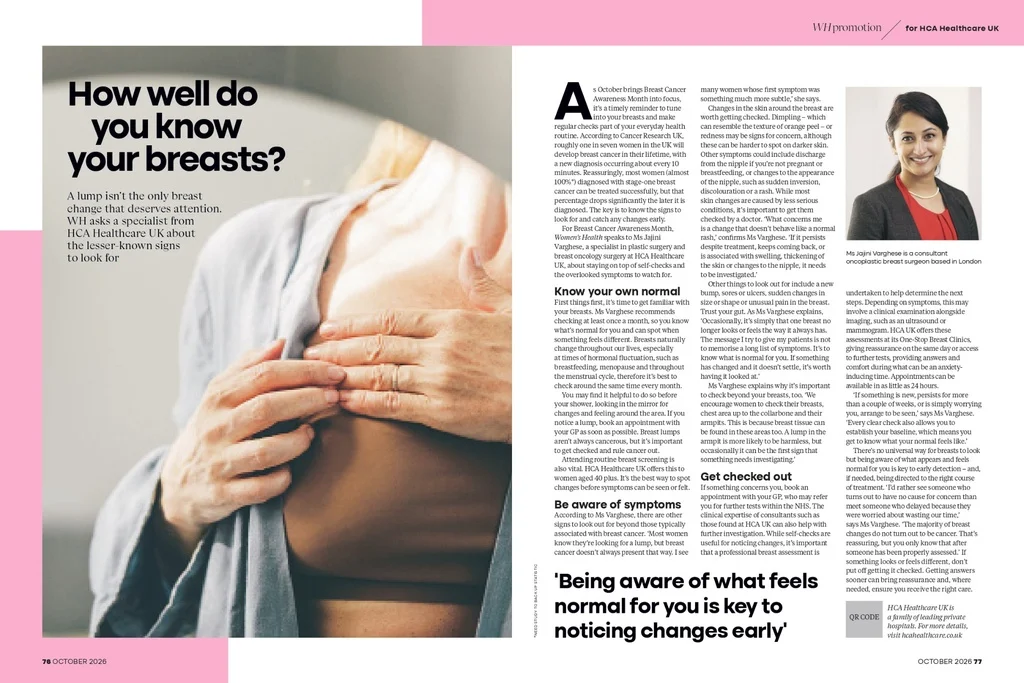
You may have wanted fuller, lifted or more balanced breasts for years, and at the same time watched your mother, aunt or grandmother go through breast cancer. If you are thinking about breast surgery with family history of breast cancer, it is natural to wonder whether one concern rules out the other. It does not. Wanting a change in how your breasts look and wanting to protect your health are compatible goals.
This guide is for women in the UK considering augmentation, uplift or another cosmetic breast procedure who are worried about breast cancer in the family. In short: I recommend a breast-health review before any elective breast operation for every woman, whatever her family history. Whether you then need imaging, a family-history clinic or a genetics referral depends on your assessed risk and any symptoms, not simply on having a relative with breast cancer.
Please read this as general information. It does not replace a consultation, NHS family-history services, genetic assessment or routine screening.
Breast Surgery With Family History of Breast Cancer: Why Risk Comes First
A family history does not automatically rule out cosmetic surgery, and it does not mean you carry a BRCA variant. But understanding your risk can change practical decisions: which imaging you have before surgery, where an implant sits, how future screening is done, or whether you might prefer to wait for a genetic test result.
Clarifying risk first is not about panic or cancelling your plans. It simply means the cosmetic conversation starts from accurate information.

What Counts as a Family History of Breast Cancer?
Clinicians look at the pattern of cancers across several generations, on both sides of your family, rather than at one relative in isolation.
First-degree and second-degree relatives
A first-degree relative is your mother, father, sister, brother, daughter or son. A second-degree relative is a grandparent, aunt, uncle, niece, nephew or half-sibling. Your father’s side counts just as much as your mother’s, because inherited variants can pass through men who never develop cancer.
Features that raise the level of concern
The NHS Genomics Education Programme resource on family history of breast and ovarian cancer describes the patterns that make an inherited cause more likely, including:
- Breast cancer diagnosed at a young age
- Several relatives on the same side of the family with breast cancer
- Bilateral breast cancer, or more than one primary cancer in the same person
- Ovarian cancer in the family, which is linked with BRCA1 and BRCA2
- Male breast cancer in any relative
- Jewish ancestry, including Ashkenazi Jewish ancestry, which that resource lists as a relevant factor
- A known inherited variant in the family, such as BRCA1, BRCA2, PALB2, CHEK2 or TP53
Putting the Numbers in Perspective
According to Cancer Research UK’s summary of breast cancer risk factors, having one first-degree relative with breast cancer is associated with roughly twice the risk of a woman with no affected first-degree relative. The same source makes a reassuring point: more than 85% of women with an affected first-degree relative will never develop breast cancer themselves.
Breast Cancer UK’s facts and figures report that around 11% of breast cancer patients have a family history of the disease, and that risk is higher when a relative was diagnosed young. For most women, then, a family history means a raised risk rather than a likely diagnosis.
How Risk Is Assessed: The NICE CG164 Standard
The national standard for assessing and managing familial breast cancer risk in England and Wales is the NICE familial breast cancer guideline (CG164). It covers referral, risk classification, genetic testing, surveillance and risk-reducing options. NICE checked whether it needed updating in its 2024 exceptional surveillance report.
Lifetime risk categories
CG164 groups women by estimated lifetime risk of breast cancer:
- Near-population risk: below 17%
- Moderate risk: 17% or more but below 30%
- High risk: 30% or more
Specialists estimate where you sit by reviewing your pedigree alongside personal factors. Many family-history and genetics services use the CanRisk tool, which runs the BOADICEA model. Your category then guides whether you stay in routine screening or are offered enhanced surveillance, which for some higher-risk women includes breast MRI. The exact plan depends on your age, your category and the guideline, so I would not want you to guess it from an article.
When genetic testing is considered
Under CG164, genetic testing is considered when the combined probability of carrying a BRCA1, BRCA2 or TP53 variant is roughly 10% or greater, or when a variant is already known in the family. Testing comes with genetic counselling, so you understand what a positive, negative or uncertain result would mean for you and your relatives. A single relative with breast cancer later in life often does not reach that threshold.
Do Not Wait if You Have Symptoms
Anything new should be assessed promptly through your GP rather than saved for a cosmetic consultation. Symptoms that need attention include:
- A new lump or thickening in the breast or armpit
- A change in size or shape of one breast
- Dimpling, puckering or redness of the skin
- A nipple that has become pulled in, or a rash on the nipple
- Nipple discharge, particularly if bloodstained or from one side only
A symptom checklist helps you notice change, but it is not a substitute for examination, imaging or screening. Most breast symptoms are benign, yet each deserves a proper look.

What Happens Next: Your Practical Routes
Start by writing down a three-generation family history: parents, siblings, children, grandparents, aunts, uncles and cousins on both sides. For each relative with cancer, note the cancer type, side of the family, age at diagnosis, whether both breasts were affected, and any genetic test result. Older relatives can sometimes clarify that a grandmother’s “women’s cancer” was ovarian.
Route 1: Your NHS GP
Book a GP appointment and bring your written history. Your GP will judge whether you meet the criteria for referral. You can ask directly: “Does my history meet the threshold for a family-history clinic or the genetics service?” If you have symptoms, say so clearly, as that follows a different, faster pathway.
Route 2: NHS family-history clinic or clinical genetics
If referred, a family-history breast clinic will estimate your risk and advise on surveillance. Where the pattern suggests an inherited variant, or a family variant is known, you may be referred to the NHS clinical genetics service. Expect a questionnaire about relatives beforehand and some waiting time, which varies by area; your GP or the clinic can give a realistic estimate.
Route 3: A private one stop breast assessment
A one stop breast clinic brings consultation, examination and any indicated imaging into a single visit, usually a few hours, with results discussed the same day where possible. Imaging is chosen according to your age, symptoms and risk, not offered by default.
- What to bring: your family-history notes, any genetic results in the family, previous scan reports, a list of medicines and any past breast surgery details.
- GP letter: self-pay patients may not need one, but a GP referral letter is often requested by insurers and helps keep your NHS records joined up.
- Questions for your insurer: Is a GP referral required? Is assessment of symptoms covered? Is a family-history assessment without symptoms covered? Is imaging included? Do I need a pre-authorisation number? Insurers generally do not fund cosmetic surgery itself.
A private assessment, including a family history breast cancer risk assessment in London, can examine you, review your history, discuss how a procedure would affect surveillance and signpost you to NHS genetics if appropriate. It cannot replace NHS screening, family-history clinics or formal genetic counselling, and it does not guarantee you will qualify for testing.
Breast Augmentation With a Family History of Breast Cancer: What Implants Do and Do Not Do
Women often ask me whether implants make cancer more likely, or whether they might protect the breast. Here are the facts as they stand.
- Implants do not prevent breast cancer. Your breast tissue remains and carries the same risk it did before.
- Current evidence does not suggest implants increase the risk of ordinary breast cancer. The NHS guidance on breast enlargement advises women with implants to stay breast aware and keep attending screening.
Your family history relates to ordinary breast cancer risk. That is the main thing to keep in mind when weighing breast implants and breast cancer risk.
A separate issue: BIA-ALCL
Breast implant-associated anaplastic large cell lymphoma (BIA-ALCL) is a rare lymphoma that develops in the scar capsule around an implant, mostly linked with textured implants. It is not breast cancer, and it is not what runs in families. I discuss it with every augmentation patient as part of implant choice, quite apart from family history.
How Breast Implants Affect Mammograms and Cancer Detection
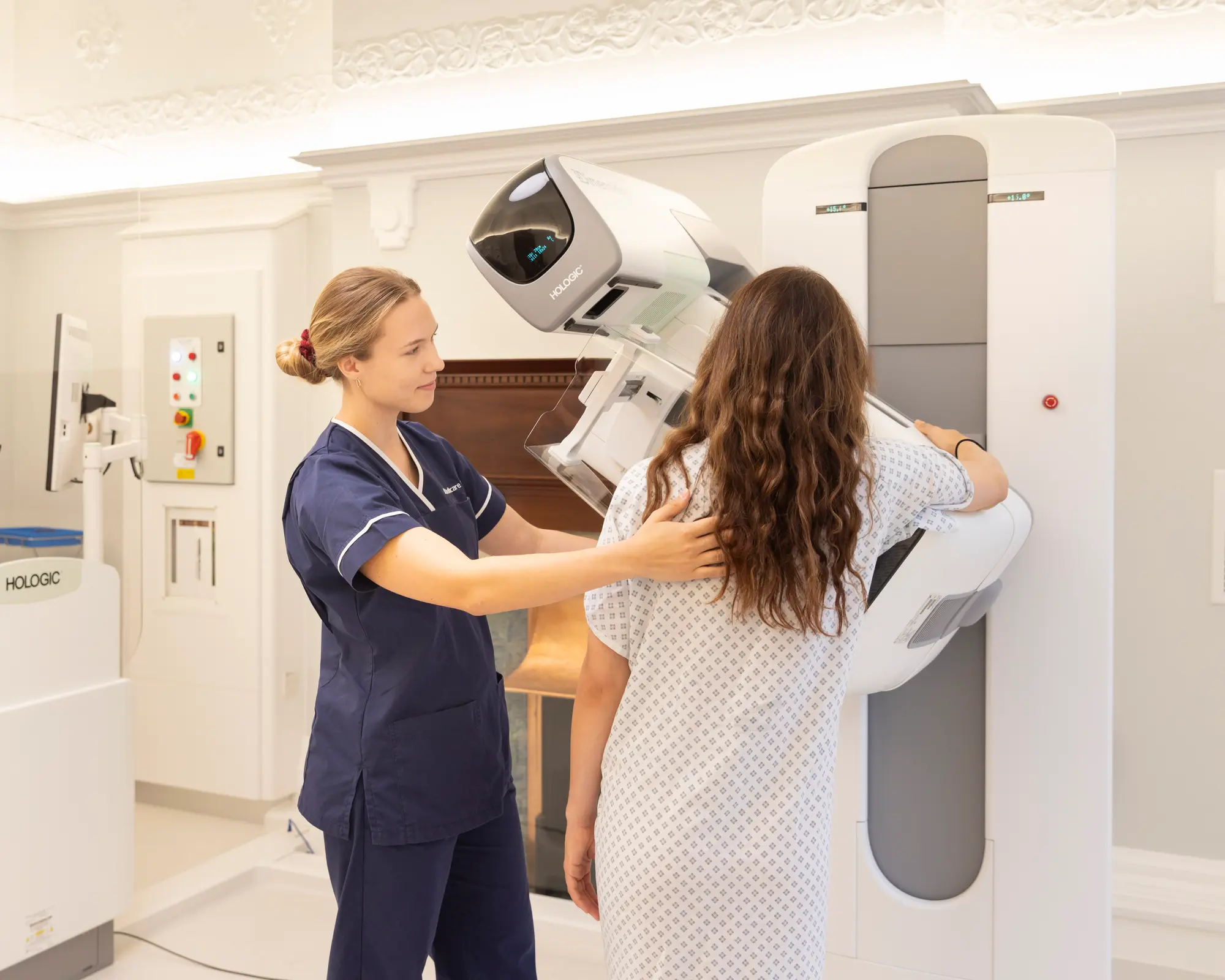
Silicone and saline implants both show up on a mammogram and can hide some breast tissue. Placement matters: an implant behind the chest muscle generally allows more breast tissue to be pulled clear for imaging than one placed directly behind the breast tissue, although both can be screened.
The NHS Breast Screening Programme guidance on screening women with implants sets out the key points:
- Tell the screening team about your implants when booking and at your appointment.
- Radiographers still take implant displacement views (the Eklund technique), easing the implant back against the chest wall and drawing breast tissue forward. Placement does not remove the need for these views.
- Some tissue may remain harder to see, and appointments can take a little longer.
- Screening is not an implant check. The programme looks for cancer, not rupture. Implant integrity needs separate follow-up through your surgeon or clinic.
If you are, or may become, eligible for enhanced surveillance, I plan implant size and placement with future imaging in mind.
BRCA and Breast Implants: Timing and Sequencing
If BRCA1, BRCA2 or another high-risk variant is known or suspected in your family, the question is one of order rather than a simple yes or no. There is no blanket rule for or against elective surgery.
- Testing first? A result can change your plans, so many eligible women prefer to know before committing to elective surgery.
- Future risk-reducing surgery? Some carriers choose risk-reducing mastectomy with reconstruction. If that is likely, an augmentation now may later be revised, and it can make sense to plan both together.
- Surveillance: scarring after uplift or reduction, and implants after augmentation, change how scans look, so a pre-operative baseline may be advised where imaging is indicated.
- Life plans, including pregnancy and breastfeeding.
As a surgeon dual-trained in plastic surgery and breast oncology, I find these conversations work best when cancer risk and aesthetic goals are discussed together. You can read more about mastectomy with immediate reconstruction if this applies to you.
Comparing Cosmetic Breast Procedures When You Have a Family History
None of these operations reduces cancer risk. They differ in what they change and what they mean for imaging and follow-up.
| Procedure |
Main goal |
Imaging considerations |
Long-term follow-up |
| Breast augmentation (implants) |
Increase volume and shape |
Eklund displacement views; placement affects how much tissue is visible |
Implants are not lifelong; periodic review and possible exchange |
| Breast uplift (mastopexy) |
Lift and reshape, reposition the nipple |
Internal scarring may show on later scans |
Lower maintenance unless combined with implants |
| Breast reduction |
Reduce size and weight |
Removed tissue is examined; post-surgical changes noted on later scans |
Routine screening continues |
| Fat transfer |
Modest volume and contour change |
Fat can form small cysts or calcifications needing careful interpretation |
Volume may change; tell radiologists |
Getting a breast uplift with a family history of breast cancer is often straightforward once your risk is understood, while implant-based procedures need more thought about screening. Our pages on breast augmentation and breast uplift surgery explain each operation and its recovery.
Should I Get a Breast Check Before Breast Augmentation?
Yes. I believe a pre-operative breast-health review makes sense for anyone considering cosmetic breast surgery. It includes your history, symptoms and an examination. What follows depends on what it finds: imaging is guided by your age, symptoms and risk, and genetics referral by whether you meet CG164 criteria. Planning breast surgery with family history of breast cancer simply means that review carries a little more weight.
Questions to Ask Your Breast Surgeon
- How have you taken my family history into account?
- Do I need imaging or a genetics referral before surgery, and why?
- How will this procedure affect my future mammograms or MRI scans?
- What implant type and placement do you recommend, and why?
- Who provides long-term implant follow-up, and how are implant problems checked?
- If I later need risk-reducing surgery, how would today’s operation affect my options?
A good surgeon will answer these plainly. If you feel rushed, take more time before deciding.
Key Takeaways
- A family history does not rule out cosmetic surgery, but risk should be clarified first.
- NICE CG164 is the national standard: near-population risk is below 17%, moderate 17% to under 30%, high 30% or more.
- Genetic testing is considered at roughly a 10% or greater chance of a BRCA1, BRCA2 or TP53 variant, or when a family variant is known.
- New symptoms need prompt GP assessment.
- Implants neither prevent nor are known to cause ordinary breast cancer; BIA-ALCL is a separate, rare lymphoma.
- Eklund views are still needed with implants, and screening is not an implant check.
Your Next Step
If you want better looking breasts and breast cancer runs in your family, start with the picture rather than the procedure. Write down your family history, see your GP about NHS family-history or genetics services if your history suggests it, and have a breast-health review before deciding on elective surgery. Once that is done, the conversation about breast surgery with family history of breast cancer becomes calmer and better informed.
If you would like an assessment that considers breast health and cosmetic goals together, you are welcome to book a consultation with our team on Harley Street or at our North London hospitals.